Preterm Lung Health Research AZTEC BALLOON RHiNO
AZTEC Trial Azithromycin Therapy for Chronic Lung Disease of Prematurity
AZTEC publications

The AZTEC evidence base

The programme spans the main trial and follow-up protocols, pre-specified statistical methods, the randomised controlled trial, the NIHR Health Technology Assessment report, and microbiology and antimicrobial-resistance analyses.

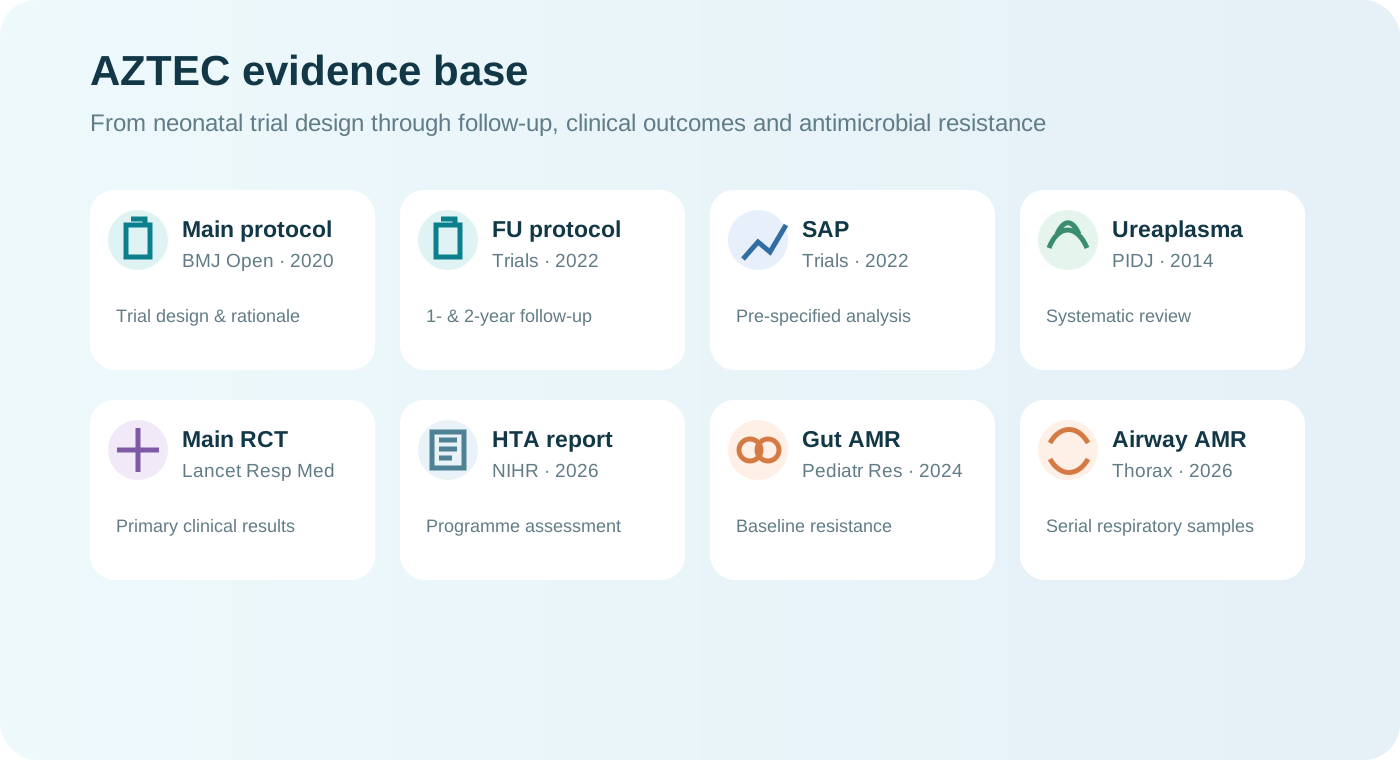
Illustration of the AZTEC evidence library
Trial design & rationale

Protocol, statistical methods and biological rationale

Protocol

Study protocol: azithromycin therapy for chronic lung disease of prematurity (AZTEC)

Lowe J, Gillespie D, Hubbard M, et al. BMJ Open. 2020;10:e041528.

The published protocol describes the rationale, eligibility criteria, intervention, outcomes, microbiological sampling and trial procedures.

Read publication →

Follow-up protocol

Follow-up study of infants recruited to the randomised, placebo-controlled trial of azithromycin for the prevention of chronic lung disease of prematurity in preterm infants – study protocol for the AZTEC-FU study

Kotecha SJ, Course CW, Jones KE, Watkins WJ, Berrington J, Gillespie D, Kotecha S. Trials. 2022;23:796.

The AZTEC-FU protocol specifies respiratory, neurodevelopmental, growth, mortality and safety outcomes through 2 years’ corrected age, together with linked clinical and biological-sample analyses.

Read publication →   PDF →

Statistical analysis plan

AZTEC—azithromycin therapy for prevention of chronic lung disease of prematurity: a statistical analysis plan for clinical outcomes

Lau TMM, Lowe J, Pickles T, Hood K, Kotecha S, Gillespie D. Trials. 2022;23:704.

The pre-specified analysis plan defines the primary and secondary clinical analyses before completion of the trial.

Read publication →

Systematic review

Association between pulmonary Ureaplasma colonization and bronchopulmonary dysplasia in preterm infants: updated systematic review and meta-analysis

Lowe J, Watkins WJ, Edwards MO, et al. Pediatric Infectious Disease Journal. 2014;33:697–702.

This updated meta-analysis helped establish the biological and clinical rationale for adequately powered intervention studies.

Read publication →
Main clinical evidence

Primary AZTEC results and programme report

Primary RCT

Azithromycin therapy for prevention of chronic lung disease of prematurity (AZTEC): a multicentre, double-blind, randomised, placebo-controlled trial

Lowe J, et al. The Lancet Respiratory Medicine. 2024;12:608–618.

The definitive primary trial report presents the clinical effectiveness and safety findings from AZTEC.

Read publication →

NIHR HTA

Azithromycin therapy for prevention of chronic lung disease of prematurity (AZTEC): a randomised placebo-controlled trial

Lowe J, Gillespie D, Aboklaish A, et al. Health Technology Assessment. 2026;30(12):1–17.

The NIHR report integrates the clinical trial and programme findings and provides the full commissioned assessment.

Read publication →

Antimicrobial resistance

Macrolide resistance before and during AZTEC

Baseline AMR

Baseline azithromycin resistance in the gut microbiota of preterm born infants

Gallacher DJ, Zhang L, Aboklaish AF, Mitchell E, Wach R, Marchesi JR, Kotecha S. Pediatric Research. 2024;95:205–212.

This study established that azithromycin-resistant organisms and macrolide-resistance genes were already common in the preterm gut microbiota early in life.

Read publication →

Respiratory AMR

Assessment of macrolide resistance in the respiratory tract of preterm-born infants during treatment with azithromycin in the AZTEC clinical trial

Aboklaish AF, Watkins WJ, Gallacher D, Consoli C, Lowe J, Marchesi JR, Kotecha S. Thorax. 2026. Online ahead of print.

Serial respiratory sampling showed that macrolide-resistance genes were common at baseline and changed little overall with azithromycin, although resistance across multiple antibiotic classes remained clinically relevant.

Read publication →

Explore the programme

From methods to clinical and microbiological findings

Trial results

See the primary findings explained clearly.

Results →

Research resources

Protocol and researcher-facing material.

Researchers →

Follow-up

See how the research continues beyond neonatal care.

Follow-up →
Cookie settings